

Why “24/7” Is a System, Not a Slogan
“24/7 emergency” is one of the fastest ways to earn urgent calls—and one of the fastest ways to damage trust when the phone isn’t actually covered. In NYC, prospects often call multiple providers back-to-back and hire whoever answers with confidence.
When your site, Google Business Profile (GBP), and phone system disagree, you create a measurable problem: missed calls, wasted ad spend, negative reviews, and confusing signals for local search. The fix isn’t more copywriting. It’s building one source of truth for availability and enforcing it across every touchpoint.
The Hidden Cost of “24/7” When Intake Isn’t Staffed
A “24/7” promise sets an expectation that the customer can validate in seconds—by calling. If nobody answers (or the voicemail is slow, full, or confusing), you don’t just lose that lead; you teach the market you’re unreliable.
This also creates reputational drag. People who feel misled are more likely to leave harsh reviews, mention “never answered,” or question your professionalism—feedback that future buyers (and increasingly, AI summaries) can surface.
The Local SEO Angle: Consistency Beats Guesswork
Google wants businesses to present accurate, consistent information. While “rankings” aren’t determined by a single field, mismatches between GBP hours, website claims, and real-world responsiveness can lead to customer dissatisfaction signals and policy risk.
Even if you keep rankings, you can lose the click-and-call moment—when your listing shows up, someone taps, and you don’t pick up.
Define Your “Availability Policy” (The One Truth)
Before touching your website or GBP, write down what you can actually deliver. Your policy should be specific enough that a dispatcher, receptionist, or answering service can follow it without improvising.
Policy Elements You Must Decide
These decisions sound operational, but they directly determine what your marketing is allowed to say.
- Coverage window: truly 24/7, extended hours, or business hours + emergency triage
- Service types covered after hours: everything vs. “no heat/no water leak only,” etc.
- Geography covered after hours: full service area vs. limited radius
- Response standard: “answered live,” “callback within X minutes,” or “next business day”
- Fallback path: what happens if the primary line fails or spikes in volume
The Wording Standard: “Answering” vs. “Available”
If you can’t answer live at 2:00 a.m., you may still be “available” only if you can reliably call back fast—and your messaging must match that reality. “24/7 phone answered” is a stronger claim than “24/7 emergency response,” and it should only be used when it’s true.

Build the Availability Truth System (Website + GBP + Phones + Schema)
Once you have your policy, you’ll implement it in four layers. The goal is simple: a customer sees one story, calls, and experiences that exact story.
Step 1: Make GBP Hours Match Reality (and Your Promise)
GBP is where high-intent NYC customers often decide in seconds. Your hours must be accurate, and your “24/7” positioning should be supported by how calls are actually handled.
Set or verify:
- Primary hours (including weekends)
- Special hours (holidays and exceptions)
- Phone number (ensure it’s the same one your ads and site promote, unless you have deliberate tracking)
If you truly have 24/7 live coverage, “Open 24 hours” can be appropriate. If you don’t, consider standard hours plus clear after-hours instructions—because “we’re open” and “we answer” are not the same thing to a caller.
Step 2: Align On-Site Messaging With Intake Reality
Your website needs to communicate availability precisely—especially on emergency and service pages where urgency is highest.
Replace vague claims with operationally true statements, such as:
- “Emergency calls answered 24/7” (only if answered live)
- “24/7 emergency voicemail monitored; callback within X minutes” (only if you meet it)
- “Same-day service available—call for scheduling” (only if same-day slots exist)
Avoid burying the truth in fine print. If after-hours coverage is limited, state it in plain language near the primary call-to-action so you don’t create a bait-and-switch experience.
Step 3: Fix Call Routing and After-Hours Coverage (The Real Conversion Engine)
Your phone system is the “checkout page” for urgent services. A perfect landing page cannot convert an unanswered phone.
You need a documented call flow for:
- Business hours (who answers, what happens if busy)
- After-hours (who answers, how triage works)
- Overflow (what happens during spikes)
- Escalation (when a technician is paged)
If you use an answering service or IVR, write a short script that matches your website language. If your page says “24/7 emergency,” your IVR can’t say “Our office is currently closed” without immediately breaking trust.
Schema: Make Your “Hours Truth” Machine-Readable
Google’s LocalBusiness structured-data documentation is the implementation reference for opening-hours properties and related markup. Keep those values aligned with the service availability actually offered. Structured data won’t fix operational gaps, but it can prevent confusion and reinforce consistency. It also prepares your site for machine interpretation by search engines and AI assistants.
What to Mark Up (and What Not to Overpromise)
On your contact page and location/service pages, consider schema that reflects your actual policy.
- LocalBusiness / ProfessionalService / HomeAndConstructionBusiness (as appropriate)
- openingHoursSpecification for real office hours
- telephone that matches your primary intake line
- areaServed if you serve specific boroughs/areas (don’t exaggerate)
If you’re not truly open 24 hours, don’t encode 24/7 hours in schema. Keep schema aligned with reality, and use on-page language to explain after-hours handling honestly.
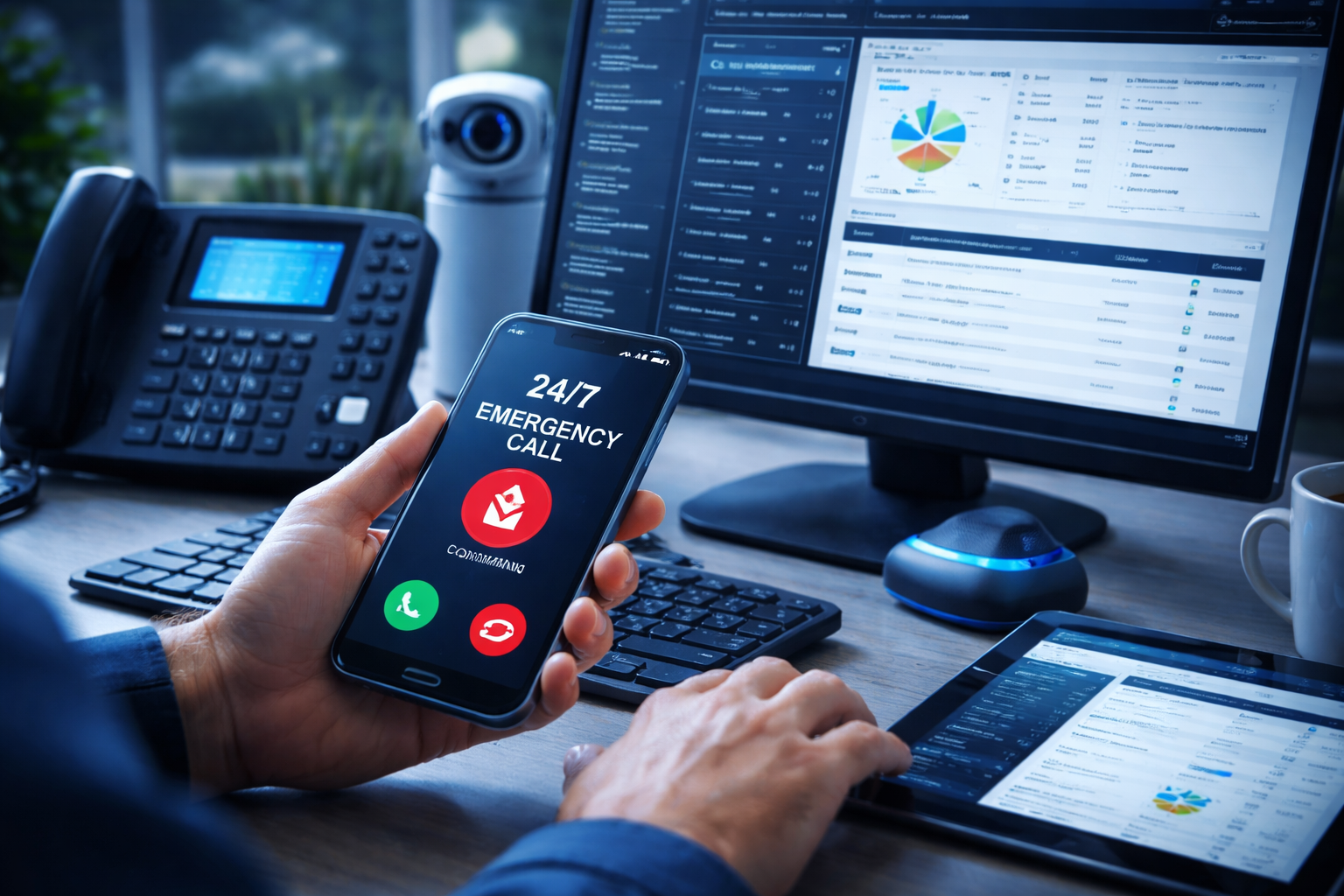
The Missed-Call + Voicemail Latency Audit (Weekly, Non-Negotiable)
Once you claim emergency availability, you need a simple audit loop that keeps your promise honest. This is where most businesses fail: they set hours once and never verify what customers experience.
What You’re Measuring
You’re not measuring “marketing performance.” You’re measuring whether you kept a promise.
Track:
- Missed calls by hour/day (especially after-hours)
- Time to first response (live answer or callback)
- Voicemail latency (how long it takes a voicemail to reach someone who can act)
- Voicemail quality (clear instructions, correct branding, mailbox not full)
- Outcome (booked, quoted, referred out, lost)
A Simple Weekly Routine That Works
Pick one owner: office manager, GM, or marketing lead with authority to change routing and messaging. Run the audit at the same time every week so patterns appear.
What Counts as “Pass/Fail”
Define a threshold that matches your promise. If your page implies urgency, your callback window should be short enough to be meaningful.
If you can’t meet your current threshold, you have two honest options:
- Improve coverage (staffing/routing/answering service)
- Tighten the promise (change “24/7” messaging to what you can deliver)
How to Phrase Availability Without Creating Risk
The FTC’s advertising substantiation policy provides background for reviewing objective availability and response claims before publishing them. You don’t need to abandon urgency. You need to be precise.
Safer, Still-Compelling Alternatives
Use language that creates confidence while staying verifiable.
- “Emergency line monitored after hours” (only if monitored)
- “After-hours emergency callbacks” (only if callbacks are fast)
- “Same-day appointments available” (only if capacity exists)
- “Priority dispatch for urgent issues” (only if you actually prioritize)
If You Do Offer True 24/7 Live Answering
Then lean into it—but make sure it’s consistent everywhere: header, emergency page, GBP, and phone greeting. The quickest way to waste a true competitive advantage is to hide it behind inconsistent hours and a confusing IVR.

Key Takeaways
- “24/7 emergency” is an operational promise that must match the real phone experience.
- Build one availability policy, then enforce it across GBP hours, on-site messaging, call routing, and schema.
- If after-hours is callback-based, say that clearly and meet a defined response window.
- Run a weekly missed-call + voicemail latency audit to catch breakdowns before reviews do.
- Consistency protects conversions, reputation, and local visibility—without relying on hype.
Frequently Asked Questions
Should I set my Google Business Profile to “Open 24 hours” if I only monitor voicemail?
No. If customers call and reach a “closed” message or a voicemail that isn’t handled quickly, the experience contradicts the listing and increases complaint risk. Use accurate hours and clear after-hours instructions that match what you can deliver.
Can inconsistent hours between my website and GBP hurt local SEO?
It can create confusion and reduce engagement (clicks, calls, satisfied interactions). Even when rankings don’t visibly drop, inconsistent signals often reduce conversions because people hesitate or call someone else.
What’s the difference between “24/7 emergency service” and “24/7 phone answered”?
“24/7 phone answered” implies a live human picks up at any time. “24/7 emergency service” might mean dispatch or callback is available. Only use the stronger claim if you can consistently prove it with call handling.
Do I need schema to rank for emergency services in NYC?
Schema isn’t a magic ranking switch, but it helps reduce ambiguity about your business details (hours, phone, service area). The bigger win is aligning schema with the same hours and availability rules shown in GBP and experienced on the phone.
How do I audit missed calls if I’m using call tracking numbers?
Make sure you can access call logs and recordings (where permitted) by time of day, and confirm tracking numbers forward correctly after hours. Your audit should verify the real customer path: tap-to-call → routing → answer or callback.
Take the Next Step
If your site says “24/7” or “same-day” but you’re not 100% sure your phone coverage proves it, build an Availability Truth System before it costs you leads and reviews. We can help you define an availability policy, sync GBP + website + schema, fix routing/answering workflows, and set up a lightweight weekly audit that keeps your promise honest.
Want us to review your GBP hours, emergency page language, and after-hours call path and tell you exactly where the trust breaks? Book a consultation with Your Expert Tech.