
The high-intent question Manhattan business owners ask
“If something breaks at 9:30 PM—how will you handle it, and how will I know it’s being handled?”
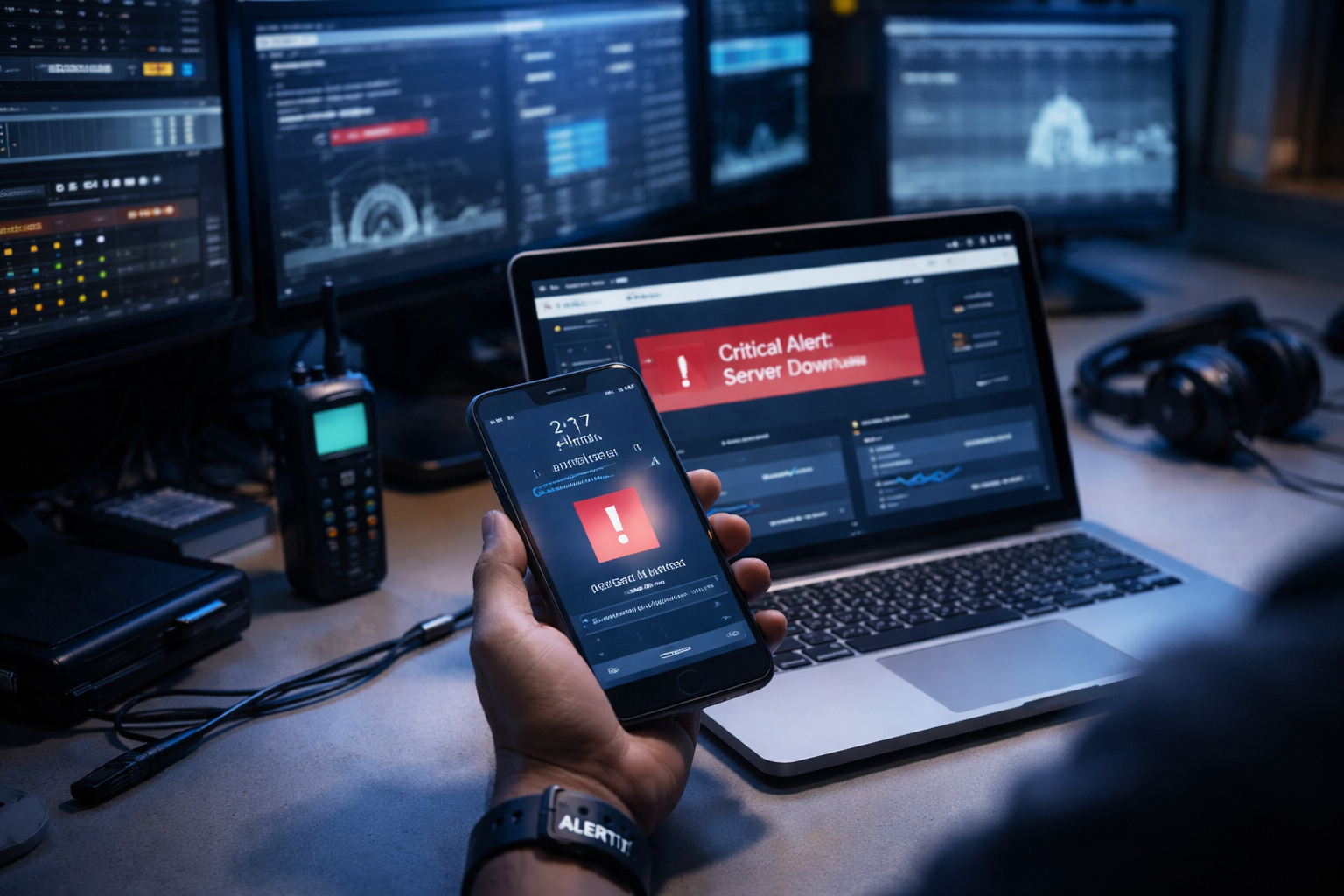
After-hours IT emergencies are where managed service promises either become real—or fall apart. Many providers market “24/7 support,” but the practical reality can range from true monitoring and on-call engineering to a voicemail box that gets checked “as soon as possible.”
Why this question matters more in Manhattan
Manhattan teams often work late, serve clients across time zones, and rely on systems that can’t wait until morning (Microsoft 365, line-of-business apps, VoIP, VPN, shared drives, cloud platforms). A short outage at the wrong time can stop revenue, delay deliverables, and create reputational damage.
What “after-hours” really includes (and what it doesn’t)
Not every off-hours issue is an emergency, and that’s fine. The problem is when you don’t find out the provider’s definitions until your first incident—and you’re already locked into a contract.
Define what counts as an “emergency” before you compare providers
Common emergencies most SMBs actually mean
For many small and midsize businesses, an emergency isn’t “my mouse won’t pair.” It’s one of these business-stopping events:
- Company-wide internet outage or firewall failure
- Email down, Microsoft 365 sign-in failures, or widespread account lockouts
- Suspected ransomware, business email compromise, or active intrusion indicators
- Phone system outage (VoIP) affecting sales/service
- Server/storage failure blocking access to critical files
- Executive device theft or compromised credentials
What should be handled next business day
Some issues feel urgent because they’re annoying, but they’re not business-critical. Examples: non-critical printer issues, a single user’s minor application glitch, optional software installs, or routine access requests.
Ask about detection: “How will you know there’s a problem if we don’t call?”
Monitoring is not the same as a help desk
A help desk reacts when someone reports a problem. Monitoring detects problems early—sometimes before your team notices. A mature managed IT program includes both.
What to look for in real monitoring
You’re looking for signals that the provider has tooling, processes, and humans assigned to alerts—not just dashboards.
- Endpoints: offline devices, disk full, failing drives, missing security updates
- Security: suspicious logins, impossible travel, MFA fatigue indicators, malware detections
- Network: firewall down, ISP issues, VPN failures, latency/packet loss
- Cloud: Microsoft 365 service health awareness, mailbox forwarding rules, admin changes
Evaluate response: “Who responds, how fast, and what happens first?”
Don’t accept “24/7 support” as a complete answer
Ask for targets and workflow. A provider can be technically “available” but still slow to acknowledge, slow to escalate, and slow to restore.
What good response looks like in plain English
A real emergency flow usually includes:
- Acknowledgment: you get confirmation the incident is seen and being worked
- Triage: initial assessment, scope, and immediate containment steps
- Escalation: if needed, an engineer or security specialist is engaged
- Restoration: service is recovered or a workaround is provided
- Follow-up: root cause analysis, remediation plan, and prevention steps

Clarify communication: “How will we get updates when it’s happening?”
CISA’s StopRansomware Guide includes incident response and communications planning. Use it to discuss how the provider will coordinate a suspected security incident when normal contacts or communication systems are unavailable.
Communication is part of the service, not a courtesy
During an after-hours incident, uncertainty is expensive. You want a predictable cadence: who is contacted, how, and how often.
Questions to ask about updates
Keep it operational and specific:
- Do you provide an incident ticket with time-stamped notes?
- Who receives updates (owner, office manager, leadership group)?
- What’s the update frequency during major incidents?
- Do you use phone, email, SMS, or a status page?
Decide in advance who can authorize big actions
Some emergencies require judgment calls: disabling an account, blocking a vendor connection, shutting down a server, or forcing password resets company-wide. You want a pre-approved “authorization list” so decisions aren’t delayed at midnight.
Make sure the provider can actually fix the problem after hours
Microsoft’s emergency-access account guidance is a reference for preparing controlled access to Entra administration. Confirm who can use that access, how it is monitored, and how readiness is tested.
Confirm access and privileges (without giving away control)
After-hours response fails when the provider lacks admin rights, MFA enrollment, emergency accounts, or secure credential storage. You want them ready—but you also want proper controls and documentation.
Ask what systems they can support without “waiting for morning”
Your stack might include:
- Microsoft 365 and Entra ID (Azure AD)
- Endpoint security platform
- Firewall/router and Wi‑Fi
- Backup platform
- Line-of-business apps (cloud or on-prem)
- VoIP provider portal
If they can’t touch half your environment after-hours, “24/7” is mostly marketing.
A simple 3-step way to vet after-hours emergency readiness
Step 1: Ask for their written incident process
You’re looking for a repeatable playbook, not a casual explanation. Request a one-page overview that includes severity levels, response targets, escalation roles, and communication expectations.
Step 2: Walk through two realistic scenarios
Pick scenarios relevant to your business, such as “CEO account compromised” and “office internet down.” Ask what happens in the first 15 minutes, first hour, and by morning.
Step 3: Review what you’ll receive after the incident
A provider that takes operations seriously produces an after-action summary: timeline, impact, root cause, actions taken, and prevention steps. This is how you verify performance and reduce repeat incidents.
Understand pricing: after-hours coverage can be bundled or billed
Common pricing models you’ll see
Managed IT after-hours support is usually handled in one of these ways:
- Included for emergencies only (best when clearly defined)
- Included for any request (often more expensive monthly)
- Billed per incident or per hour after-hours
- A retainer for after-hours availability plus usage-based billing
The real question: “What will you charge us at 10 PM?”
Ask for examples in writing: one emergency, one non-emergency, and one “gray area.” Clarity here prevents arguments later.
The minimum you should expect in an after-hours SLA (in plain language)
Key SLA elements worth requesting
You don’t need a legal deep dive to evaluate service levels. You need a few operational commitments you can understand.
- Severity definitions (what is Sev 1 vs. Sev 2)
- Response time targets (acknowledgment and engagement)
- Escalation path (help desk → engineer → security)
- Communication cadence (when you get updates)
- Target restoration approach (best effort, workaround, or full restore)
What an SLA won’t guarantee
No provider can promise “zero downtime” or that every incident will be resolved in a fixed number of minutes. The goal is fast acknowledgment, competent triage, and disciplined recovery—not magical outcomes.
What you can do internally to make after-hours support succeed
Your role in a fast recovery
Even the best provider can’t fix what they can’t access or what isn’t documented. Basic readiness on your side speeds up response.

Key Takeaways
- “24/7 support” is vague; evaluate monitoring, triage, escalation, communication, and post-incident reporting.
- Get the provider’s emergency definition and pricing in writing to avoid surprises.
- Ask who responds after-hours and what the first 15 minutes look like for common incidents.
- Strong providers can detect issues before you call and can access critical systems securely after-hours.
- Your internal readiness (contacts, approvals, documentation) materially improves outcomes.
Frequently Asked Questions
What’s the difference between after-hours help desk and 24/7 monitoring?
After-hours help desk means someone is available to take your call or ticket. 24/7 monitoring means the provider is watching systems and security signals continuously and can respond even if you haven’t reported the issue.
Should we pay extra for after-hours coverage?
It depends on your risk and operating hours. If downtime outside 9–5 affects revenue, deadlines, or client trust, paying for true emergency coverage is often cheaper than absorbing repeated disruptions.
How do we verify a provider’s after-hours performance before signing?
Ask for the written incident process, sample incident report format, and a walk-through of two realistic scenarios. Also confirm exactly who is on-call (role-based) and how escalation works.
What if our business isn’t “24/7”—do we still need after-hours emergency support?
Many businesses aren’t 24/7, but threats and outages are. If a security incident begins overnight, waiting until morning can increase damage, recovery time, and cost.
What should we expect after an incident is resolved?
At minimum: a clear timeline, what was impacted, what was done, and what changes will prevent recurrence. This turns a bad night into better systems and fewer repeat emergencies.
Take the Next Step
If you’re comparing managed IT providers in Manhattan, ask them to explain their after-hours incident process in writing and walk through a realistic scenario relevant to your business. Your Expert Tech can help you evaluate coverage, SLAs, and escalation design so you know exactly what will happen when something breaks late—and what it will cost.
Contact us to schedule a consultation and get a clear, decision-ready checklist for after-hours emergency readiness.