

Choosing an IT consulting company is easier when the proposals answer the same question. One may include discovery and implementation; another may quote only the first visit. Clarify those differences before deciding which offer fits.
For a Midtown office, ask how the company will coordinate the actual site requirements. Confirm service coverage and availability directly rather than inferring them from a search listing.
1. Give providers a realistic scenario
Describe the work you need, the people affected, and the timing. Use a concrete situation such as an office move, recurring Wi-Fi problem, or change of support provider. Include known constraints and identify anything that still needs investigation.
Listen for questions about business impact, existing providers, and who can approve work. A provider should be able to explain what it needs to learn before giving a firm scope.
2. Compare the same scope
Ask for a written description of the work and the intended outputs. Separate an assessment from implementation and ongoing support so the proposal's boundaries are visible.
GOV.UK’s purchasing strategy guidance offers further questions about deliverables, ownership, and buying technology. Adapt the relevant questions to the proposed engagement.

| Comparison point | Ask each provider | What to record |
|---|---|---|
| Deliverables | What will we receive or have working? | Named outputs and completion criteria |
| Coordination | Who deals with building and external vendors? | Provider versus business responsibilities |
| Dependencies | What must be ready before work starts? | Assumptions and outstanding confirmations |
| Exclusions | Which tasks require another agreement? | Separate projects or specialist work |
| Cost basis | What can change the quoted amount? | Assumptions, included time, and additional items |
If a proposal uses broad language such as “complete setup,” ask what that includes in your environment. Document the answer so everyone evaluates the same commitment.
3. Ask for evidence that fits your project
Request an example of comparable work and an explanation of the provider's role. The point is to understand its approach, not to obtain another customer's confidential records.
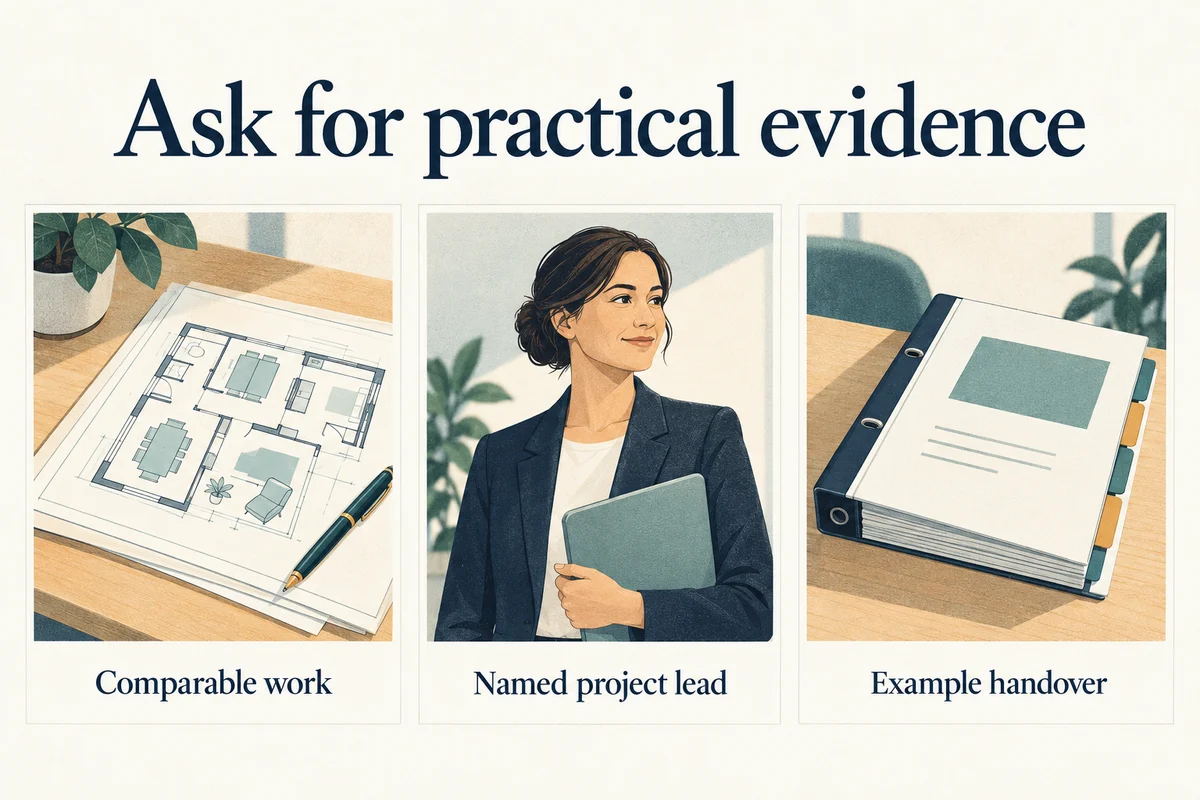
Useful discussion points include:
- Comparable constraints: How did the team handle access, scheduling, or vendor dependencies?
- Project leadership: Who will own the schedule and communicate decisions?
- Change handling: How are unexpected findings approved?
- Handover quality: Can the provider show a redacted sample or describe the documents it supplies?
- Verification: How does the team establish that the agreed work is complete?
Confirm whether the people presenting the proposal will also deliver the work. Ask how substitutions or subcontracted tasks are communicated.
4. Agree ownership and follow-up
Before appointing the company, identify who owns business accounts and where documentation will be delivered. Discuss how access is approved and reviewed when the engagement ends.
Use NIST’s account-protection guidance as a reference when agreeing how consultant accounts and permissions will be reviewed at the end of the work.
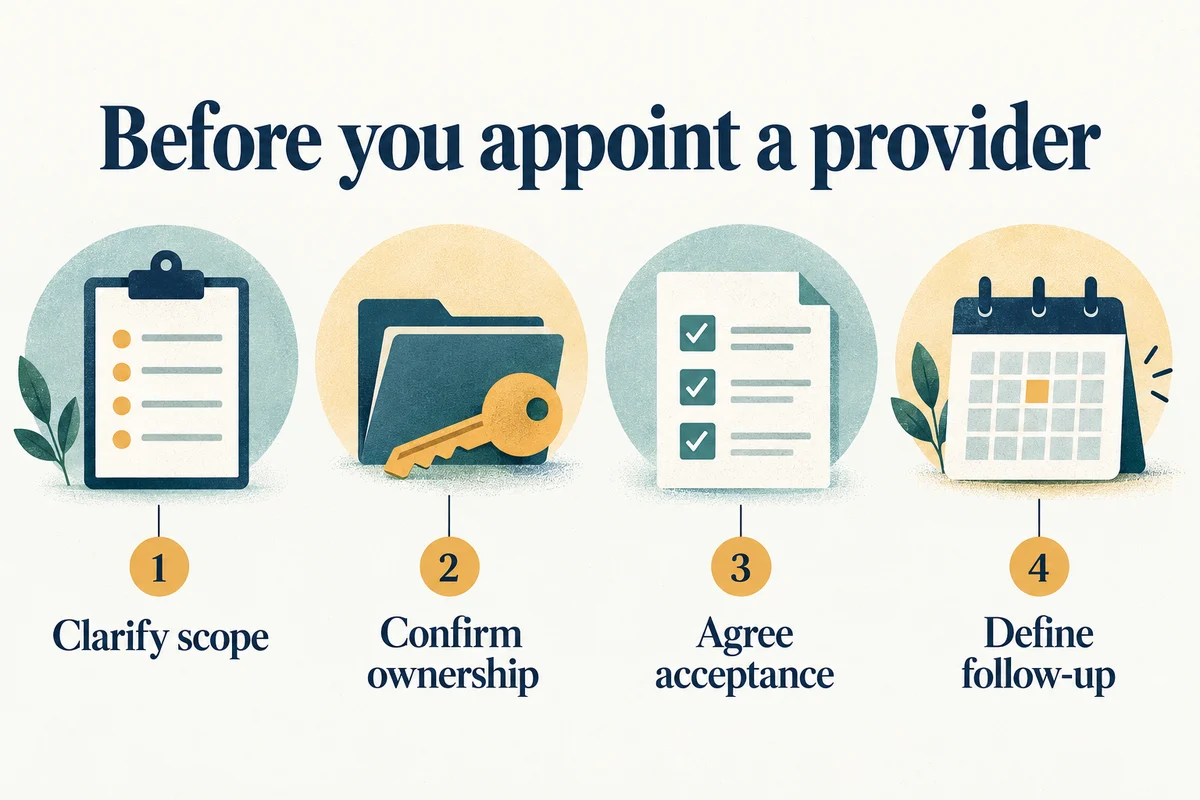
Ask how issues discovered during acceptance will be handled. Distinguish included follow-up from a separate support agreement, and clarify who responds if a problem recurs after completion.
Keep a short decision note explaining why the selected scope fits the business. This gives the project team a reference when priorities or requests change.
Prepare your brief with the Midtown project checklist. To explore an engagement with Your Expert Tech, send the project objective and office location.
Review Your Expert Tech’s IT consulting service when comparing assessment, planning, and project guidance.