
You may need help planning an office move, choosing a support arrangement, or understanding why recurring technology problems keep interrupting work. A useful first conversation starts with that business problem.
This guide takes you from a short brief to a clear engagement. Use the questions to compare providers on the same basis, rather than comparing a general promise from one with a detailed proposal from another.
1. Turn the problem into a brief
Describe what happens today, who is affected, and what you want to be different. Include the deadline and any restrictions, such as an office lease ending, a vendor renewal, or limited access to equipment.
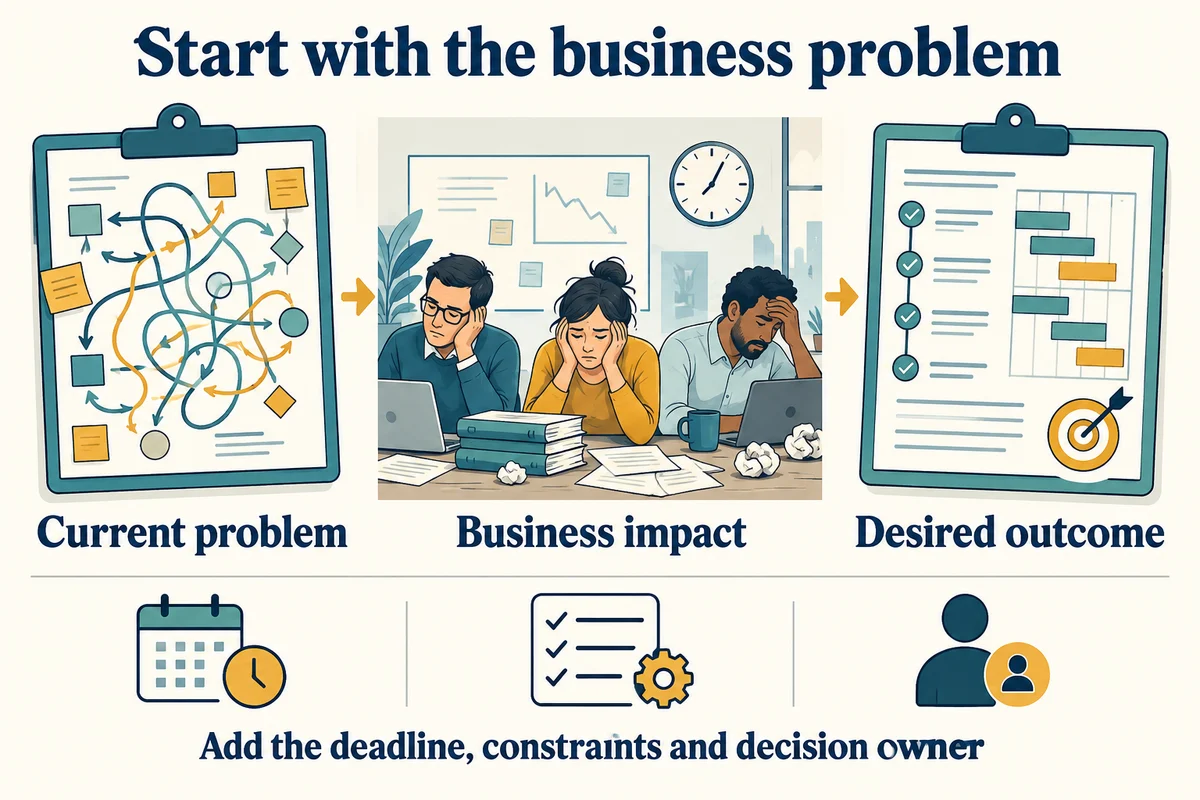
A brief can be one page. Include:
- Current situation: The recurring issue or decision that prompted the search.
- Business impact: Who loses time, which work stops, or what remains uncertain.
- Environment: Approximate staff and device counts, locations, and essential applications.
- Desired outcome: A decision, a plan, a completed change, or continuing support.
- Constraints: Timing, budget boundaries, existing contracts, and approval requirements.
Example: preparing for an office move
You do not need to diagnose the technical cause before speaking to a consultant. Mark unknowns clearly, and describe previous attempts to resolve the problem.
2. Match the engagement to the work
The word “consulting” can cover different responsibilities. Ask what the provider will actually do and what requires a separate agreement.
GOV.UK’s technology purchasing guidance provides additional questions about scope and ownership. Its public-sector setting differs from your business, but those questions can help clarify a consulting proposal.
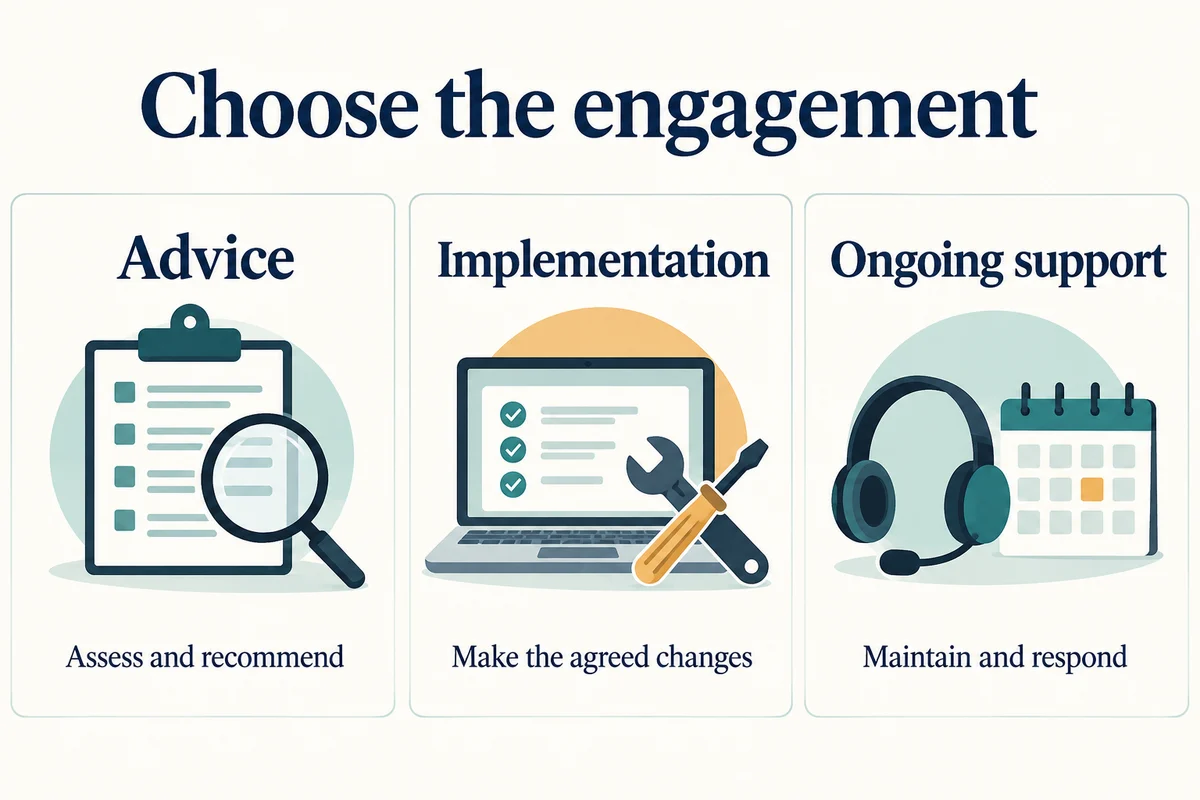
| Engagement | A useful agreed output | Question to ask |
|---|---|---|
| Assessment or advice | Findings, options, and a prioritized recommendation | What evidence will the recommendation use? |
| Implementation | Defined changes, testing, and handover notes | Who performs the work and confirms it is complete? |
| Ongoing support | Written coverage, responsibilities, and request handling | What is included after the initial project? |
| Vendor coordination | Named contacts, dependencies, and an agreed action plan | Which decisions can you make, and which need our approval? |
Ask for an example of a comparable engagement and what the consultant was responsible for. A relevant explanation of their process is more useful than a list of technologies without context.
3. Decide what needs an onsite visit
For physical inspection, equipment replacement, or office access planning, discuss who will attend, where they will work, and what must be ready. Confirm the location and availability directly; a nearby search result does not establish a provider's service coverage.
When discussing access, use NIST’s multi-factor authentication guidance as background for account protection and limiting permissions to the work required.
For planning or document review, ask whether the initial work can happen remotely. If remote system access becomes necessary, agree on its purpose, scope, approval, and removal when the work ends.
Questions for the first conversation
- What information do you need before recommending a course of action?
- Which parts require a visit, and which can be completed remotely?
- Who will do the work and communicate progress?
- What dependencies could change the schedule?
- What will we receive at the end, and how will we review it?
For an onsite visit, arrange the building contact, equipment location, escort requirements, and an authorized decision maker. Include specialist vendors when their systems are part of the scope.
4. Compare proposals and keep ownership clear
Compare the work and outputs before comparing the headline price. Ask whether discovery, implementation, travel, software, equipment, and continuing support are included or separate. If a figure is an estimate, ask which assumptions could change it.
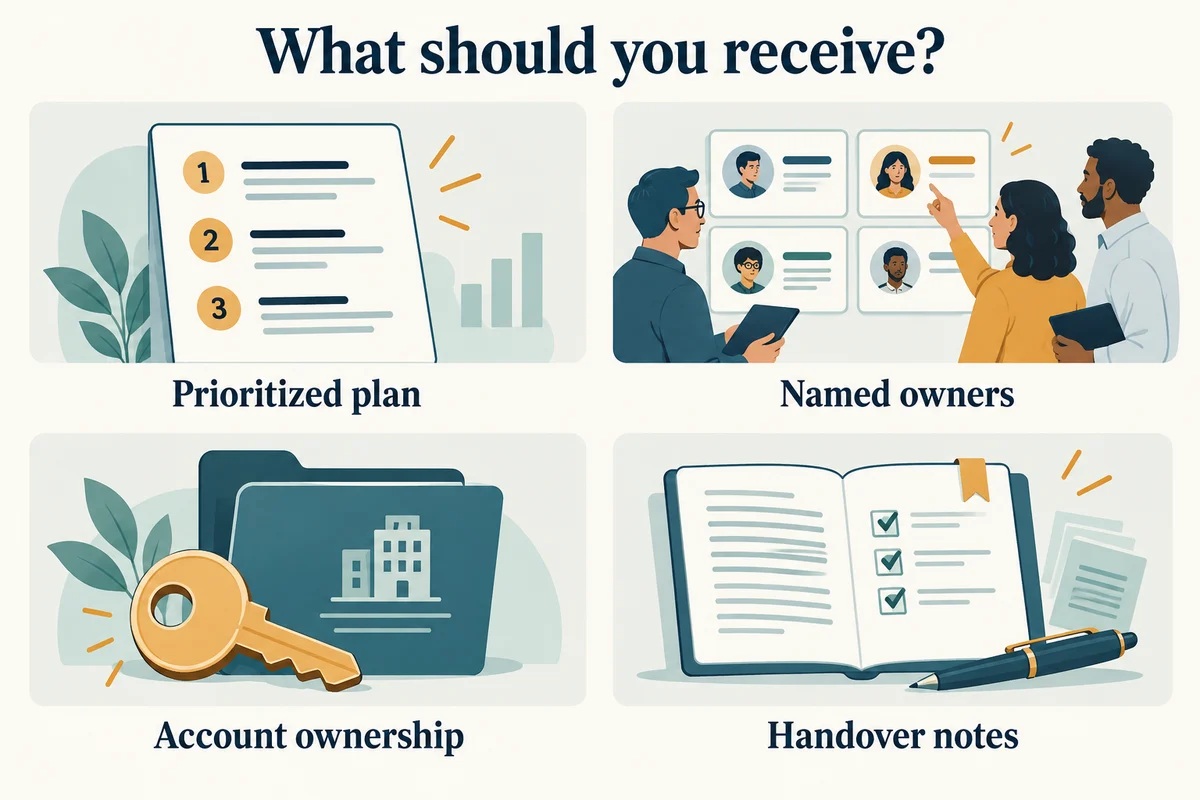
A useful recommendation should explain what to do first, why it matters, what it depends on, and who needs to act. Ask the consultant to identify uncertainties rather than bury them in a long report.
Keep business accounts registered to the business with appropriate authorized ownership. Agree how documents will be delivered, who can update them, and what happens to consultant access after completion.
Take the next step
Use the consulting preparation checklist to organize your first conversation. When you contact Your Expert Tech, include your business problem, location, desired outcome, and timing so the next discussion can focus on the right scope.
Explore our IT consulting service to discuss your business needs and the decision you want help making.