

Outsourced support works more predictably when staff and the provider know what to expect before a difficult incident. A list of tools or a ticket allowance does not, by itself, define the working relationship.
Use this guide to turn broad promises into responsibilities that your small company can understand and review.
1. Define the supported environment
List the people, devices, locations, applications, and vendors in scope. Identify exclusions and work that would be treated as a separate project. Include remote staff and shared equipment where relevant.
For the security responsibilities in the agreement, NIST’s small-business Cybersecurity Framework resources offer a useful reference for the business and provider to discuss together.
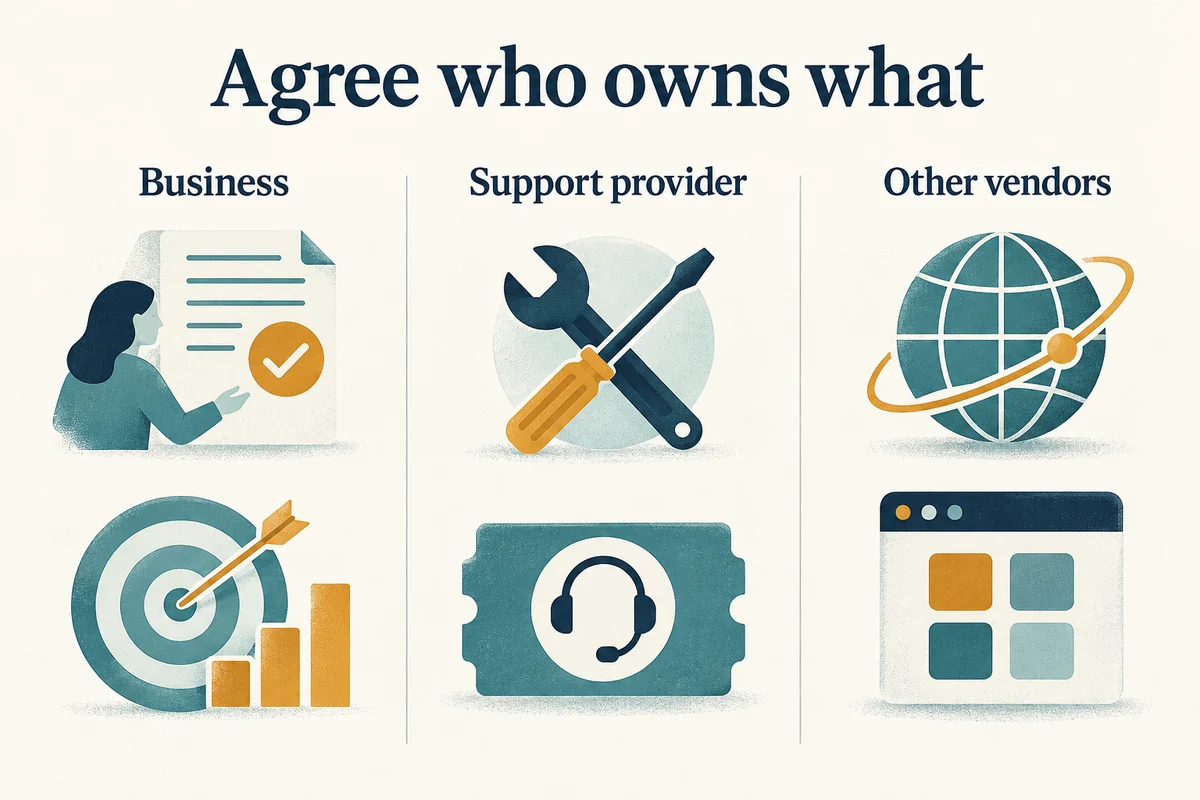
| Area | Clarify in the agreement | Business decision needed |
|---|---|---|
| Devices and users | Which are included and how changes are added | Who approves additions |
| Applications | Support provided versus vendor-owned work | Who owns each application relationship |
| Maintenance | Agreed tasks and responsibilities | Acceptable interruption windows |
| Backup and recovery | Scope, monitoring, restore testing, and exceptions | Recovery priorities |
| Projects | Work excluded from routine support | Separate approval and budget |
Ask how a new laptop, employee, office, or application becomes part of the supported environment. A simple update process prevents the agreement from drifting away from the business.
2. Make the request process easy to follow
Give employees an agreed reporting channel and a short list of information to provide: the affected task, device or location, symptom, and business impact. Explain what to do when that normal channel is unavailable.
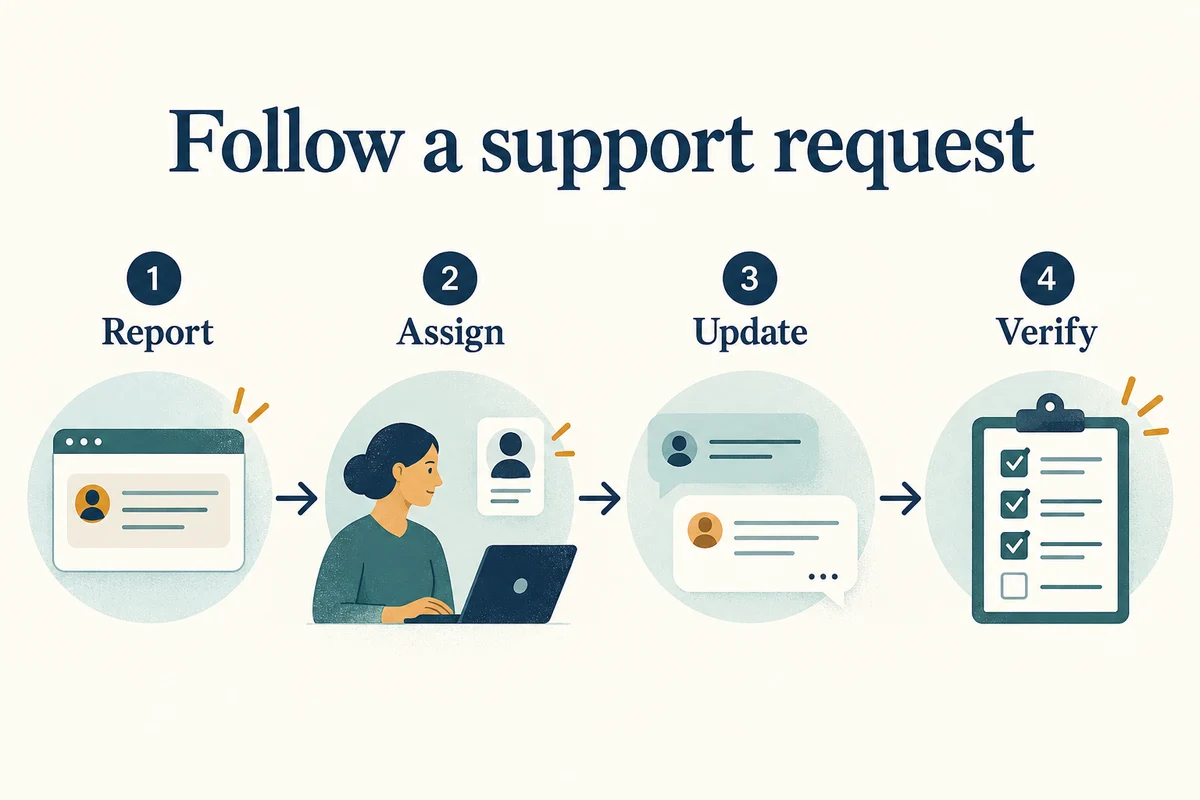
Agree how urgency is assessed, who owns the request, and when the business receives updates. Name the contact who can approve spending or disruptive changes.
Avoid requiring staff to guess the root cause. The report should make the impact clear enough for support to ask the next useful question.
Response and restoration are different
Ask what a response target actually measures: acknowledgment, a technician reviewing the request, or another event. Separately clarify restoration expectations, dependencies, and escalation. Do not treat an initial response as a promise that every fault will be fixed within the same period.
3. Preserve business ownership
Record who owns domains, business accounts, software subscriptions, and documentation. The business should know how to retrieve its records and maintain authorized control if the support arrangement changes.
NIST’s MFA and access guidance provides further context for protecting administrative accounts and reviewing access when responsibilities change.
Agree how privileged access is granted, reviewed, and removed. Keep credentials and recovery information in approved systems, with an authorized business process for obtaining access when needed.
Keep support responsibilities separate from business approval authority. The provider can recommend a change while the business remains responsible for deciding its priorities and acceptable impact.
4. Review the working agreement as the business changes
Set an agreed review cadence. Discuss recurring problems, changes in staffing or systems, coverage gaps, and decisions waiting on the business.
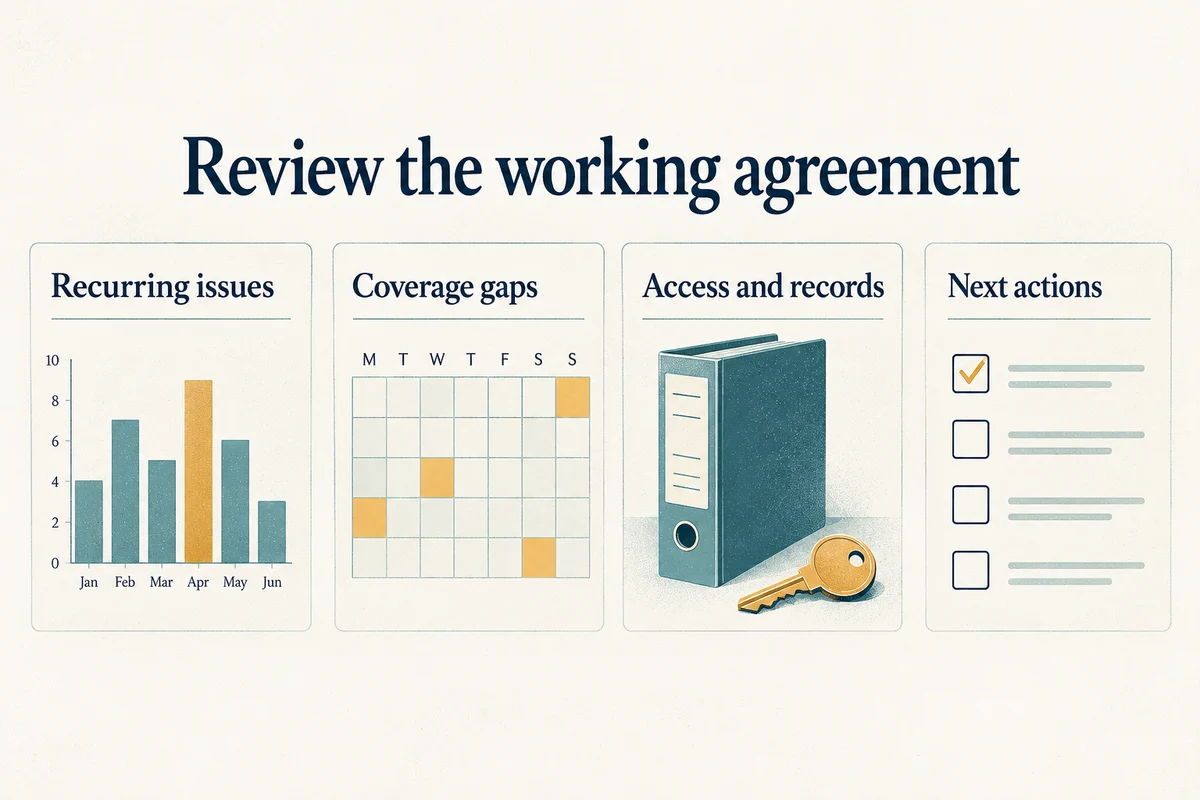
A helpful review distinguishes resolved work from repeated symptoms and unresolved causes. Ask what needs a separate project, what depends on a vendor, and what the business needs to approve.
Record changes to the scope so the written agreement and everyday service match. If the company grows or its work changes, revisit the arrangement before assuming the old coverage still fits.
Compare the model with in-house support, and use the small-business support checklist to prepare a conversation with Your Expert Tech.