
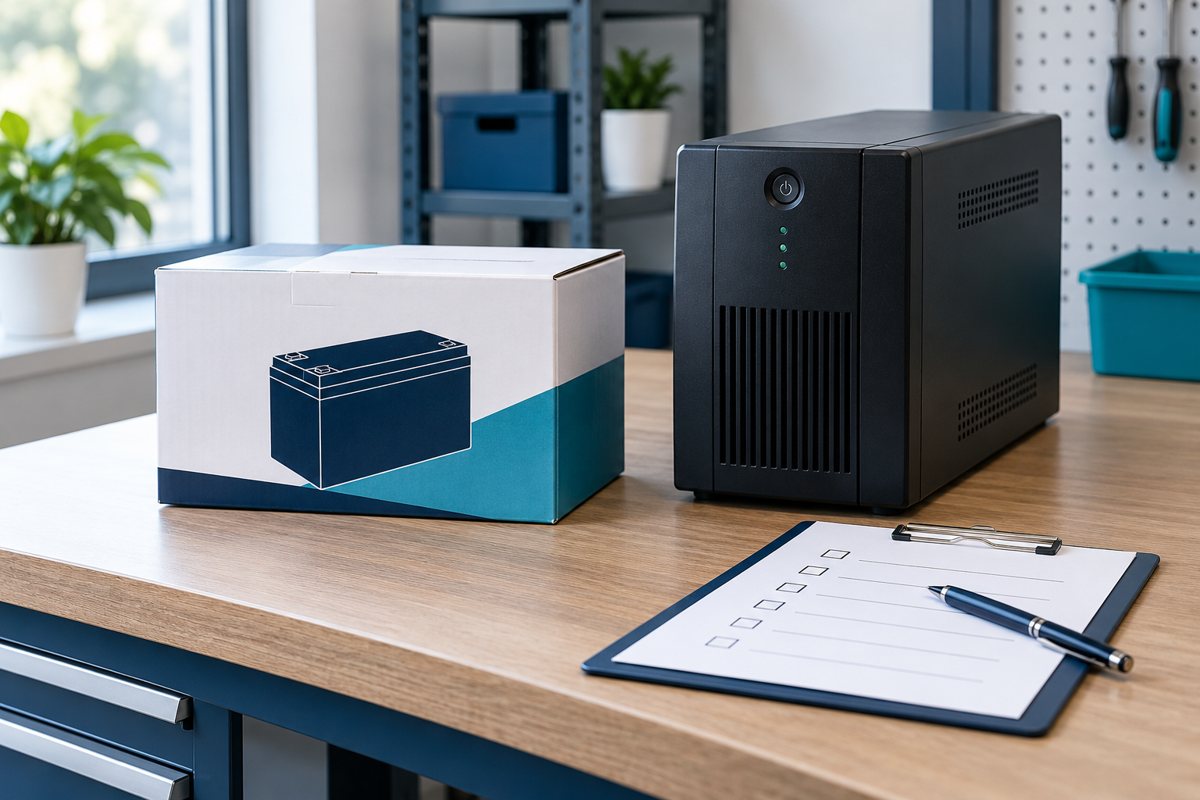
A UPS battery becomes difficult to manage when its history lives only in a technician's memory. The office may know the purchase date but not the battery model, a previous service visit, or which equipment was added afterward. A compact service record helps the owner decide what needs review and gives the service provider useful context.
This is an administrative maintenance guide, not a battery replacement procedure. Some units have user-replaceable batteries and others require trained service. Follow the exact manufacturer instructions and use qualified help when required. Do not open equipment, handle damaged batteries, or improvise replacement assemblies based on this article.
Identify the unit and the battery separately
Record the UPS manufacturer, model, serial number, location, and responsible department. Add the battery or cartridge identifier when confirmed from authorized documentation or a service record. Keep purchase, installation, and replacement dates separate; they can describe different events.
Include the supplier or service contact and where the current manual is stored. If a field is unknown, mark it unknown and assign a person to obtain the information. An invented date can lead to a misleading maintenance decision later.
Log observations without diagnosing by guesswork
Record warning messages accurately, including when they appeared and whether they remain present. Add the latest manufacturer-supported self-test result and any relevant service findings. Do not translate every warning into “battery dead” without the appropriate technical assessment.
Useful fields include:
- Date, observer, and exact warning or reported symptom
- Operating context and any recent equipment changes
- Diagnostic or service action performed by the authorized person
- Result, limitation, and outstanding issue
- Decision owner and next review date
The shutdown-testing guide explains why an equipment diagnostic and an application recovery test should remain separate records.

Make replacement a documented decision
There is no single replacement interval that can be applied blindly to every UPS, battery chemistry, environment, or duty cycle. Have the service provider review the model's requirements, current condition, warnings, and operating history. Set the next review from that assessment and the applicable instructions.
Confirm the correct approved replacement part and who is allowed to install it. Record whether the work requires an outage and what temporary arrangements the business owner has approved. A similar-looking battery or matching connector is not enough evidence of compatibility.
Eaton's installation guidance and the specific product manual should inform the service arrangements. Ask the provider to identify the applicable instructions in the work record.
Reconcile the load before restoring the old expectation
A new battery does not make an outdated runtime estimate current. Compare connected equipment with the load inventory and note additions or removals. Ask whether the previous operating plan remains appropriate before repeating its expected runtime to staff.
After authorized service, document the tests the provider performed and any verification still outstanding. Keep the installation and support handoff current if contact details or equipment identification changed.
Arrange the recycling route before the work
Identify the battery chemistry and a suitable collection or recycling route. Eaton describes its UPS battery recycling arrangements; availability and handling requirements should be confirmed for the actual item. Do not assume a household collection program accepts business-generated batteries.
The EPA's lithium-ion battery recycling guidance explains why these batteries need an appropriate collection route. Follow the recycler's and manufacturer's instructions, including special arrangements for damaged items. Do not put batteries into ordinary office trash or mixed recycling, and do not improvise shipping packaging.
Close the record with a handoff receipt
Record the service date, confirmed part, installer, verification results, and any collection receipt or reference. Note who accepted the removed battery and when. Keep only information needed for the equipment record; personal details about the service technician are unnecessary.
Service completion checklist
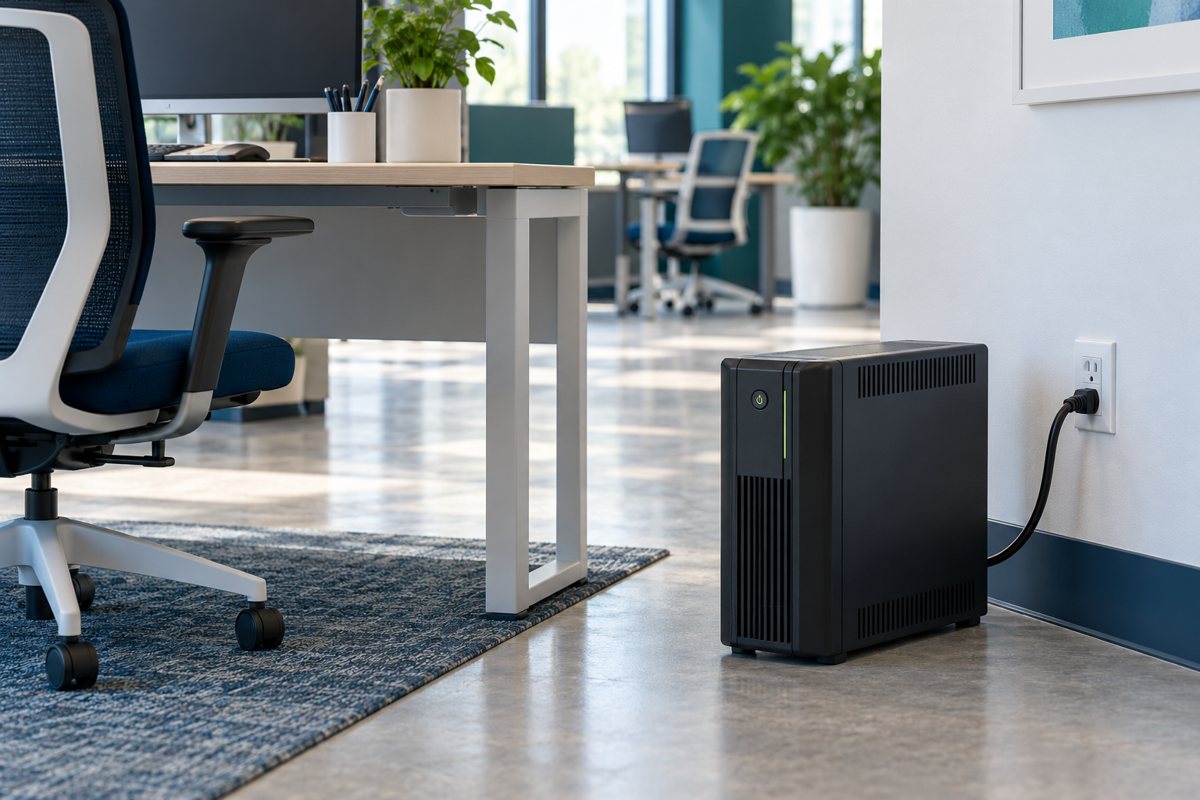
- Equipment and replacement identity confirmed.
- Work and tests documented by the authorized provider.
- Current load and operating expectations reviewed.
- Removed battery transferred through an appropriate route.
- Next review and open issues assigned.
Return to the office UPS planning guide to connect maintenance with the business continuity objective. A good service record helps the next decision; it is not a certification of uninterrupted operation or legal compliance.
Editorial review: October 18, 2026. Verify current model-specific documentation before purchasing, installing, testing, or servicing equipment. Illustrations are conceptual and do not show a verified product configuration.